Palladium is a shiny, silver-white metal that belongs to the platinum group elements.
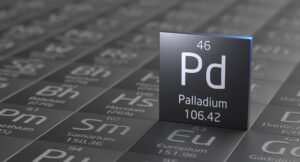

Palladium is a shiny, silver-white metal that belongs to the platinum group elements.
Palladium is a shiny, silvery-white transition metal considered the lightest of the platinum group elements (ruthenium, rhodium, palladium, osmium, iridium, and platinum).
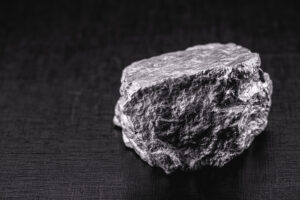
It was discovered in 1802 by British chemist William Hyde Wollaston and was named after the asteroid Pallas and the Greek goddess Athena. With an average concentration of only 0.015 ppm, palladium is one of the rarest metals on Earth. Due to its properties, it can be used in many technologies and applications.
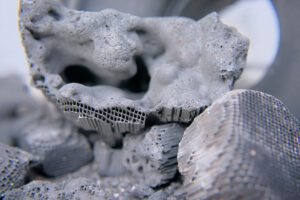
Palladium is primarily used in the automotive industry. It is utilised either on its own or in combination with platinum and/or rhodium in three-way catalytic converters. As a catalyst, it converts harmful exhaust gases, such as unburned hydrocarbons, carbon monoxide (CO) and nitrogen oxides (NOx), into less harmful substances. In 2023, this sector was responsible for about 80% of global palladium consumption .
Palladium can absorb large amounts of hydrogen (H₂) or deuterium (D₂) and release them again, but not other gases. At ambient temperature and pressure, palladium can store up to 900 times its own volume of hydrogen. The adsorbed hydrogen is released again and this process can be repeated indefinitely. Due to this property, it is also metaphorically called as a ‘metallic sponge’. Palladium is therefore often used as a gas separation membrane in the form of a thin metallic layer on a porous carrier material to separate hydrogen from gas mixtures or to ‘store’ it ..
Palladium remains an important metal catalyst in the chemical industry because it facilitates hydrogenation and dehydration reactions. In the food industry, it is used for fat hardening or fat hydrogenation. This process converts unsaturated fatty acids and oils into margarine, which is used as a substitute for butter .
In 2010, Richard F. Heck, Ei-ichi Negishi and Akira Suzuki were awarded the Nobel Prize in Chemistry for their pioneering research into palladium-catalysed cross-coupling reactions in organic synthesis. These reactions combines two different chemical fragments, simplifying the production of complex molecules, especially in the synthesis of natural products and drugs. A practical example is discodermolide, which was originally extracted from a sea sponge (Discodermia dissoluta). This substance shows potential efficacy against cancer cells . Thanks to palladium-catalysed cross-coupling reactions, this molecule can now be produced in large quantities in the laboratory. This advancement enables researchers to test it extensively and develop it further as a potential cancer drug without having to rely on sea sponges.
Furthermore, the industry uses palladium as a catalyst to produce other drugs, such as the painkiller Naproxen.
The metal dissolves in aqua regia. Palladium is used as a metal complex in the Wacker-Höchst process, which is one of the oldest industrial methods for producing acetaldehyde.
Palladium is a precious metal and has high chemical stability. As a solid, it only reacts with oxygen when heated to 350 °C under extreme chemical conditions, which makes it a popular alternative to traditional metals in the jewellery industry. Palladium is a much harder metal than gold and unlike silver, it does not tarnish over time. It has similar properties to platinum but is lighter. This character makes palladium a popular alternative to platinum in hypoallergenic jewellery and for making white gold jewellery.
Thanks to its chemical stability, it has a wide range of applications. In medicine, for example, it is used as an alloy additive in dental alloys and surgical instruments. It also plays an important role in electrical sensors due to its adsorption capacity and is utilised in coins, fuel cell electrodes and membrane catalysts.
Palladium is rarely found in its metallic form but is more common in ore deposits. It often occurs with other platinum group metals or in copper and nickel ore deposits. The metal is usually obtained as a by-product of metal mining such as platinum or nickel because of their commercial interest.
Major palladium producers include Russia, South Africa, Canada, the United States and Zimbabwe. Finland was the largest producer of primary palladium within the European Union in 2022.
The refining of palladium (and platinum group elements in general) is a complex separation process. As a result, palladium recycling is becoming more and more important and accounts for an increasing proportion of total palladium supply. The majority of the recycled material originates from used automotive catalytic converters, old jewellery and electronic devices.
While palladium recycling is on the rise, the supply still cannot satisfy the global demand.
In March 2024, the platinum group elements were added as the 27th critical material to the list of 34 strategic raw materials (SRM) under the European Critical Raw Materials Act.
Further information: